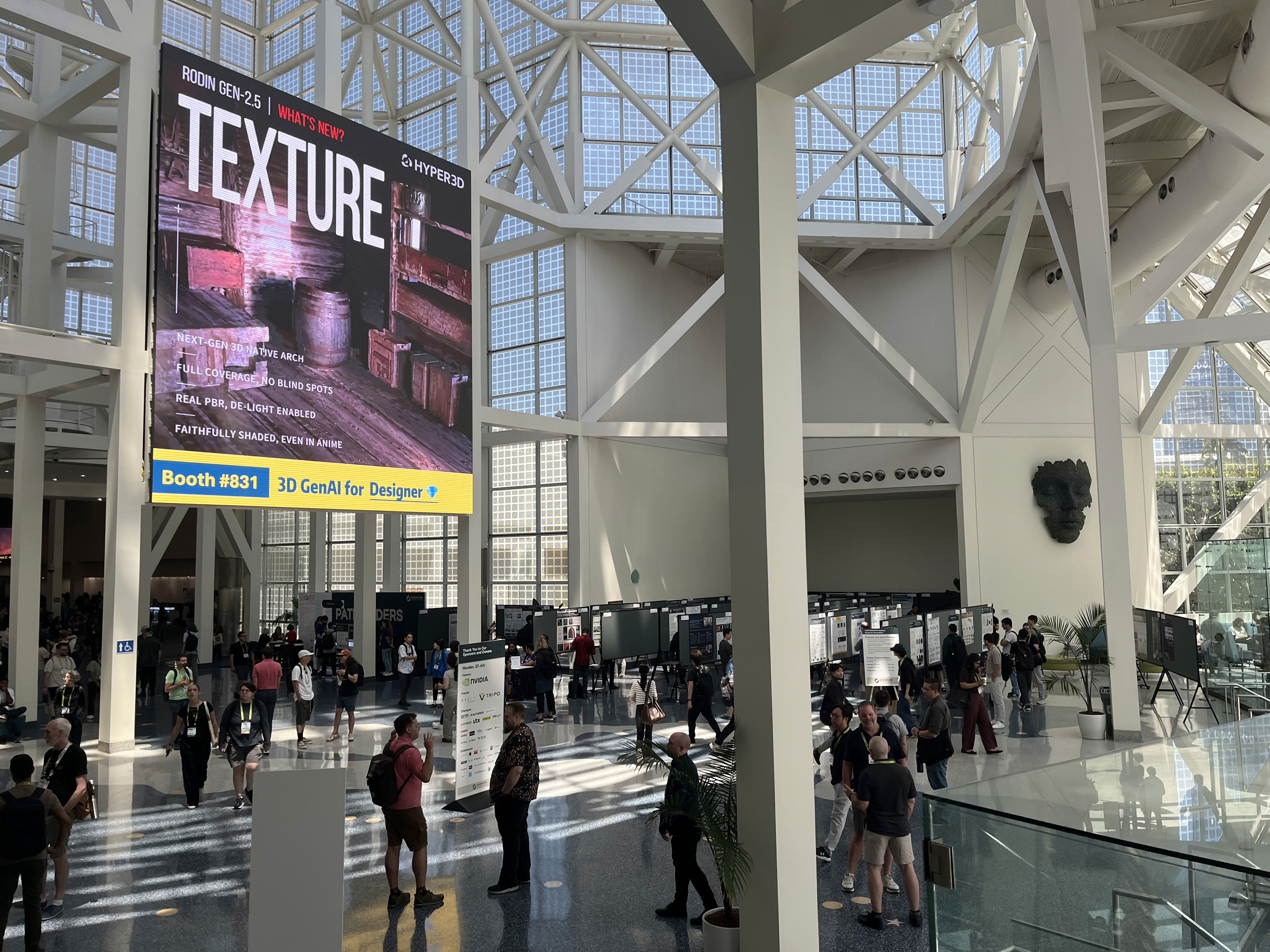
The 53rd annual SIGGRAPH conference took place this July in Los Angeles. Over the course of the week, researchers, engineers, and graphics specialists met to evaluate the shifting landscape of computer graphics.
Across 327 technical papers and discussions with 9,500 attendees from 69 countries, one central theme emerged: the industry is re-engineering its entire pipeline to support real-time artificial intelligence, while confronting the critical challenge of keeping generative outputs under precise control.
Below we’re sharing our key takeaways from the event and what they signal for the industry as a whole.
Hardware and Infrastructure Pivot to Real-Time AI
Graphics vendors demonstrated a marked shift toward AI-native infrastructure. Rather than treating machine learning as an offline post-processing step for pre-rendered scenes, chipmakers and software providers are optimizing graphics APIs and developing dedicated silicon to execute AI models directly in real time.
Neural rendering and Gaussian splatting have moved into production-ready territory. Supported by AI-accelerated shaders, these techniques allow complex material properties, dynamic lighting, and detailed geometries to run at interactive frame rates. For beauty technology, where consumer engagement depends on fluid, lag-free interactions on standard web browsers and smartphones, this widespread hardware and API backing marks an important operational milestone.
The Tension Between Generation and Fidelity
While the efficiency gains of real-time AI rendering were widely recognized, the technical sessions reflected growing caution around generative methods. Diffusion-based models offer strong visual fidelity, but they introduce unpredictability into the rendering pipeline. In production graphics, an unguided model risks altering textures, light falloff, and colour palettes in ways the creator never intended.
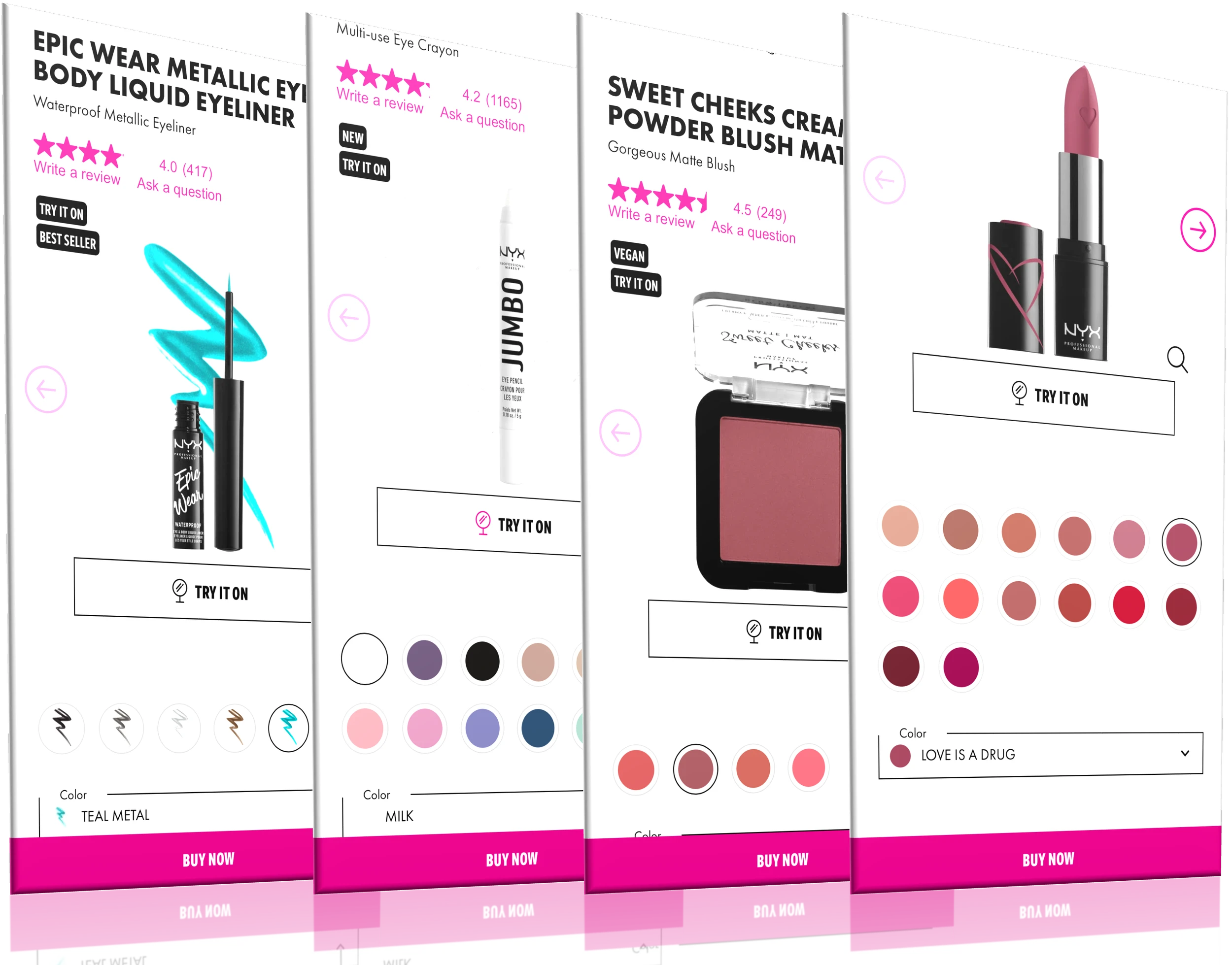
In beauty simulation, this distinction is decisive. Virtual try-on cannot rely on algorithmic interpretation; it requires physical plausibility. A lip gloss must reproduce the exact light scattering of its real-world formulation. A hair colour service must account for natural base tones and hair movement, rendering a result a stylist can genuinely achieve rather than a visually appealing hallucination.
Precision, Control, and Smartphone-Scale Capture
The research presented in Los Angeles outlined practical pathways to resolve these issues, many of which align directly with ModiFace's technical roadmap:
Secondary Validation Layers: To prevent diffusion models from drifting away from product truth, the graphics industry is adopting multi-stage architectures. Pairing generative pipelines with secondary reasoning models allows systems to enforce strict shade targets and cross-view consistency across varying light conditions.
Democratized Digital Humans: 3D face and hair reconstruction, historically dependent on studio camera rigs, has shifted toward single-device smartphone capture. This transition validates our focus on lightweight, edge-compatible architectures that deliver clinical-grade tracking and reconstruction on consumer phones.
Transparent Workflows: The consensus across panels underscored that the importance of user agency AI systems earn commercial and creative trust when they operate with clear constraints and transparent steps, rather than functioning as opaque black boxes.
Looking Ahead
SIGGRAPH 2026 and the broader computer graphics ecosystem is now validating what ModiFace has practiced for nearly two decades: credible simulation requires an understanding of material science, not just generative guesswork. As ModiFace continues to evolve its real-time diagnostic and try-on engines across L'Oréal brands and retail partners, our priority remains clear: leveraging new AI acceleration while ensuring every shade, finish, and diagnostic result remains mathematically accurate to the physical product.